 Skip to content


Table of Contents
- What Makes a Great Online Art Course
- Online Art Classes for Beginners: What to Look For
- Live Online Art Classes vs. Self-Paced Learning
- Online Painting Classes: Choosing Your Medium and Instructor
- Self-Paced Art Courses: Flexibility Without Sacrificing Quality
- Key Questions to Ask Before Enrolling
- Conclusion: Finding Your Best Fit
- Frequently Asked Questions
Last Updated: October 6, 2026
What Makes a Great Online Art Course
Choosing from available online art courses can feel overwhelming. Hundreds of options exist, each claiming to teach you drawing, painting, or digital design. The real question isn't which course exists, it's which one matches your goals, learning style, and commitment level.
A strong online art course combines three essentials: clear instruction that builds foundational skills, flexibility that fits your schedule, and a teaching approach that actually resonates with you. At RedBlueArts, we understand that one-size-fits-all instruction doesn't work for creative learning. Whether you're picking up a pencil for the first time or refining techniques you've practiced for years, the best course is one designed for your specific starting point.
The difference between a course that transforms your abilities and one that leaves you frustrated often comes down to instructor quality and how the material is structured. A great instructor doesn't just demonstrate techniques, they explain why those techniques matter and how to adapt them to your own artistic voice.
Online Art Classes for Beginners: What to Look For
If you're starting from scratch, the right course removes barriers that stop most beginners: confusion about materials, frustration with early attempts, and uncertainty about whether you're "doing it right."
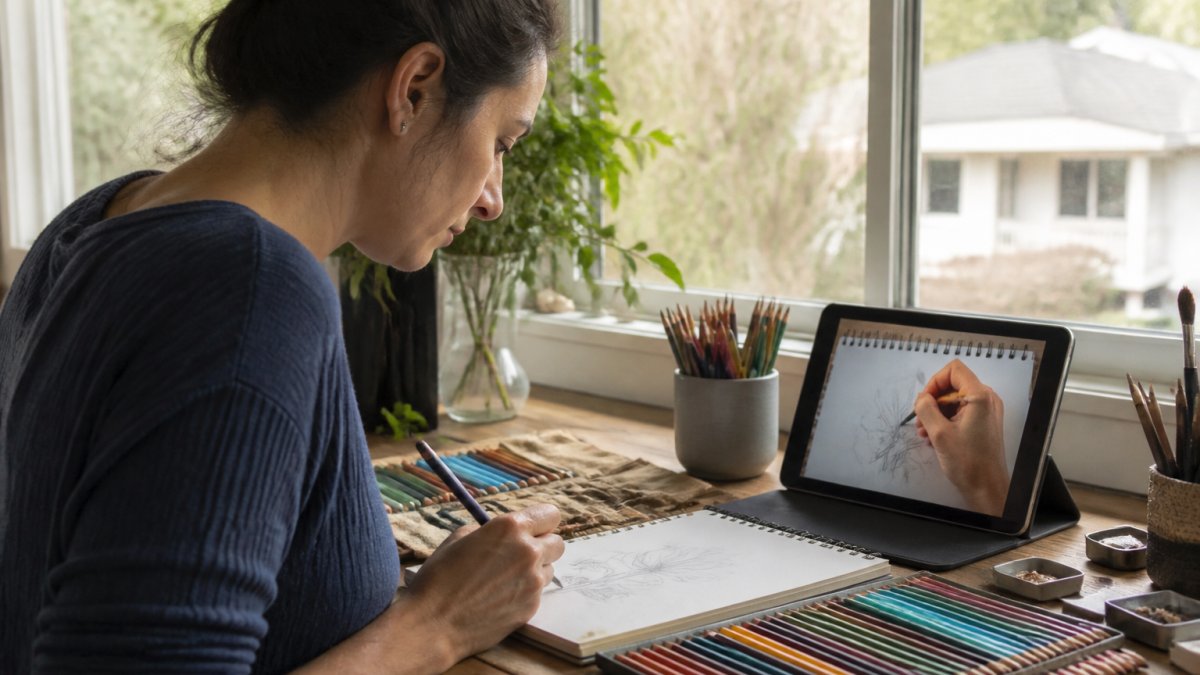
Beginner courses should prioritize observation skills before technique. Many programs jump straight to "how to draw," but the real foundation is learning to see, understanding proportions, light, shadow, and form in the world around you. When a course teaches observation first, everything else clicks into place faster.
A Criteria-Based Comparison for Beginners
Most ranking lists name a single "best" course without explaining how they judged it. Use these five criteria to compare any beginner option on equal footing:
| Criterion | What to check | Why it matters for beginners |
|---|---|---|
| Discipline fit | Does the course cover drawing, painting, or digital art, and does it match the medium you want to learn? | A drawing course won't teach you watercolor control. |
| Level honesty | Is there a true beginner track, or does "beginner" assume prior experience? | Mislabeled levels cause early frustration. |
| Format | Live, self-paced, or hybrid? Are sessions recorded? | Your schedule and confidence level determine which works. |
| Feedback loop | Instructor critique, peer review, or self-assessment only? | Beginners need external eyes to catch bad habits early. |
| Total cost | Tuition plus materials, software, and any subscription fees. | The sticker price rarely reflects what you'll actually spend. |
Total Cost and Value
A free course isn't free if it requires a $200 software subscription or a specific set of professional-grade paints. When comparing options, add up:
- Tuition or subscription, one-time, monthly, or annual
- Materials, brushes, paper, canvas, paints, or a tablet and stylus
- Software, digital courses may require a paid app or license
- Mentorship, some programs charge extra for instructor feedback
A common pattern is that low-cost or free courses recover value through upsells or lack personalized feedback. A higher upfront cost may include materials guidance and direct critique, which often shortens the learning curve.
Accessibility and Learning Support
Beginners benefit from courses that accommodate different needs. Check for:
- Captions and transcripts on video lessons
- Mobile access so you can review lessons away from your desk
- Scheduling flexibility for live sessions, including recordings if you miss one
- Multiple feedback channels, written critique, video review, or live Q&A
- Clear supply lists with budget-friendly alternatives
A Decision Guide by Learner Goal
No single course is best for every beginner. Match the option to your goal:
- Hobbyist exploring art for fun: Prioritize low-cost, self-paced courses with short lessons and no required materials beyond a sketchbook and pencil.
- Beginner building foundational skills: Choose a structured course with a clear progression, observation-first teaching, and regular feedback.
- Portfolio builder or career-focused learner: Look for courses that include milestone projects, critique, and guidance on presenting work.
- Parent seeking art for a child: Check age suitability, session length, and whether the instructor has experience teaching younger students.
Look for these specific features in a beginner program:
- Clear progression from basics to complexity, starts with simple shapes and builds toward full compositions
- Material guidance, explains what supplies you actually need (not an overwhelming shopping list)
- Frequent practice opportunities, short exercises that reinforce each lesson without demanding hours of commitment
- Honest feedback on common mistakes, addresses the specific errors beginners make, not generic advice
- Accessible instructor, someone who remembers what it felt like to be new and explains accordingly
One critical question: does the course assume you need confidence-building, or does it jump into technical instruction? Beginner courses at RedBlueArts, for example, focus on both skill development and building the creative confidence that stops many people from continuing. That combination matters. A technically perfect lesson taught by someone who makes you feel inadequate will drive you away. A supportive instructor teaching solid fundamentals will keep you engaged.
Live Online Art Classes vs. Self-Paced Learning
This choice determines your entire learning experience. Both formats work, the question is which one works for you.
Live online art classes create accountability and immediate feedback. You show up at a scheduled time, work alongside other students, and get real-time guidance from an instructor.
The trade-off is inflexibility. You must be available at specific times. If life interrupts, a work deadline, family obligation, or simply a week when energy is low, you miss the session.
Self-paced art courses offer complete control over timing and rhythm. You work when you want, pause to practice the same technique five times if needed, and never feel rushed.
The challenge is motivation and accountability. Without a scheduled class time and peer presence, it's easy to skip lessons or move through material without truly absorbing it. Self-paced courses demand self-discipline.
Which is better? Consider your personality. If you thrive with structure and external motivation, live classes work. If you're self-directed and need flexibility, self-paced learning makes sense.
Online Painting Classes: Choosing Your Medium and Instructor
Painting has distinct disciplines: watercolor, acrylic, oil, and digital painting each require different techniques and materials. Your course choice should match your intended medium, not force you to learn in a format that doesn't suit the subject.
Watercolor demands understanding transparency, water control, and working light-to-dark.
The instructor matters as much as the medium. An instructor who paints in watercolor but teaches acrylic won't convey the intuitive understanding that makes the difference between a frustrating experience and a breakthrough. Look for courses taught by someone who actively works in the medium they're teaching.
RedBlueArts instructors, led by renowned contemporary artist Gopaal Seyn, bring decades of active artistic practice into their teaching. When an instructor is still creating, solving problems, and experimenting in their own work, that current knowledge transfers to students.
Ask potential courses directly: does the instructor actively paint? What's their recent work? Have they exhibited? These aren't ego questions, they're indicators that the instruction comes from current, lived experience rather than theoretical knowledge.
Self-Paced Art Courses: Flexibility Without Sacrificing Quality
Online art courses work best when they're structured like a real curriculum, not just a collection of random video lessons.
A well-designed self-paced program has clear learning objectives for each unit. You know what you're supposed to learn, why it matters, and how to know when you've learned it. Weak self-paced courses feel like watching someone paint while you sit passively, no clear goals, no way to measure progress.
The best self-paced formats include:
- Structured lessons with specific objectives, not "learn to paint" but "understand how light creates form" with a focused exercise to practice it
- Downloadable resources, reference materials, color charts, or technique guides you can return to
- Community or feedback option, even in self-paced formats, the ability to submit work for critique or connect with other students prevents isolation
- Milestone projects, larger assignments that synthesize multiple lessons and show your growth
- Lifetime access, self-paced courses should remain available so you can return to earlier lessons as needed
The flexibility of self-paced learning means you can take weeks on one concept if it challenges you, or move quickly through material you grasp immediately. That adaptability is powerful for adult learners who often juggle multiple commitments.
However, self-paced learning requires you to maintain momentum. Set a schedule, even a loose one, and stick to it. Treat the course like a commitment to yourself, not an optional activity you'll get to eventually.
Key Questions to Ask Before Enrolling
Before committing to any course, answer these questions:
About the instructor: Does this person actively create art? Can you see their current work? Do their teaching philosophy match how you learn? Some instructors are highly technical; others emphasize creative expression. Neither is wrong, but one might suit you better.
About the curriculum: What specific skills will you develop? Can you see the course outline, or is it vague? Does the progression make sense, does each lesson build on previous ones?
About format: Is it truly live or recorded? If live, can you access recordings if you miss a session? If self-paced, how long do you have access?
About community: Will you interact with other students? Some people find peer interaction motivating; others find it distracting.
About feedback: How will you know if you're improving? Do you get instructor feedback, peer critique, or must you self-assess?
About materials: What supplies do you need? Is there a required shopping list, or can you use what you have? Some courses are flexible; others require specific paints or tools.
About time commitment: How many hours per week realistically? Be honest about your schedule. A course requiring 10 hours weekly won't work if you have 5 hours available.
Conclusion: Finding Your Best Fit
The best online art course isn't the most popular, the cheapest, or the one with the fanciest production.
RedBlueArts offers online art classes designed around personalized instruction and flexible learning, whether you prefer live interaction with feedback or self-paced progression at your own rhythm.
The real measure of a course's success isn't the certificate or the completion, it's whether you pick up a pencil or brush after the course ends and keep creating.
Ready to explore online art classes that match your learning style and goals? Contact Us to discuss which format and focus area fits your creative journey.
The challenge: Finding instruction that respects your time, matches your learning style, and actually moves your skills forward.
Our solution: RedBlueArts offers personalized online art instruction led by contemporary artist Gopaal Seyn, with over 25 years of teaching experience and mentorship of more than 10,000 students.
Discover how our approach develops both technical skill and creative confidence. Get started with RedBlueArts and transform your artistic abilities.
Frequently Asked Questions
Can you really learn to draw or paint effectively through online art courses?
Yes. Online art courses work best when they combine structured instruction with regular practice and feedback. Live online art classes offer real-time guidance from instructors, while self-paced art courses let you learn at your own speed with recorded lessons. The key is choosing a course with clear learning objectives, practical exercises, and opportunities for instructor feedback, whether synchronous or asynchronous. Your progress depends more on consistent practice than the delivery method.
What should beginners look for in an online art course?
Beginners should prioritize courses that start with foundational skills like observation, basic drawing, and color theory before moving to advanced techniques. Look for instructors with proven teaching experience, clear learning objectives outlined upfront, and courses that include live feedback or portfolio review options. Check whether the course offers beginner-specific pacing and whether you can access materials after enrollment. Testimonials from other beginners can reveal whether the instructor explains concepts clearly without assuming prior knowledge.
Are live online art classes better than self-paced courses?
Neither is universally better, it depends on your schedule and learning style. Live online art classes provide real-time interaction with instructors, immediate feedback, and accountability through scheduled sessions. Self-paced art courses offer flexibility to learn around your schedule and the ability to rewatch lessons. If you need structure and motivation, live classes work better. If you juggle multiple commitments or prefer to progress at your own speed, self-paced courses are ideal. Many learners benefit from a hybrid approach.
How do I know if an online art course is worth the investment?
Evaluate courses based on instructor credentials, course duration and weekly time commitment, clear learning objectives, student testimonials, and whether outcomes are demonstrated through student work or portfolios. Check if the course includes one-on-one mentorship or group feedback. Ask whether you can preview lessons or try a sample class before committing. Read reviews from students with similar skill levels and goals. A reputable course will be transparent about what you'll learn, how long it takes, and what students typically create.


